
Anúncios
Imagine the scene: you crack open the closet door. That favorite cashmere sweater you haven’t worn since last winter is calling your name. But when you hold it up to the light, there it is: a tiny, jagged hole, right on the collar. It hurts your soul. Frustrating, right? A quick check of the next shirt reveals another one. Then, out of the corner of your eye, something fast moves. It’s that creepy little silver insect darting into a dark crevice. Silverfish.
Anúncios
These little pests act like true ninjas. Masters of hiding in baseboards, they happily munch on the glue of your hardcover books and feast on the natural fibers of your clothes. Dark, damp spaces are their favorite hangouts. And unfortunately, they absolutely love your stuff. But hold on. Before you panic and run out to buy the most toxic, lung-burning bug bomb you can find, take a deep breath. There is a much better way.
If you are desperately looking for a home remedy to get rid of silverfish, you have finally landed in the right place. We dug deep into the wisdom our grandmothers swore by, tested the most popular theories, and separated the myths from what actually gets the job done. The result? You can absolutely reclaim your closet and banish these unwanted guests for good, all while spending pocket change and keeping your home’s air breathable. And it works. Simple as that.
Anúncios
Why going natural changes the game entirely?
You know that awful feeling of deep-cleaning your entire bedroom and then being left with a massive headache from the strong chemical fumes? Nobody deserves that. Choosing ingredients you already have sitting in your pantry isn’t just a smart money-saving hack. It is fundamentally about safety and peace of mind 🌿.
Think about it for a second. Your clothes are in direct, constant contact with your skin all day long. Your beloved books sit right there on your nightstand, inches from where you sleep. Spraying these intimate spaces with harsh, toxic pesticides just doesn’t make any logical sense. Do you have pets? Kids? Then those chemicals are an even bigger no-go.
Natural solutions, on the other hand, act as incredibly strong olfactory repellents for these bugs. They disrupt their highly sensitive receptors and make them flee in terror. But for us? They leave a pleasant, cozy, or totally neutral scent. You get to protect your wardrobe without compromising your health. It really is the best of both worlds. And honestly, it feels pretty empowering to solve a frustrating pest problem using just what nature gave us.
The Best Options Detailed
Forget that old story that only toxic mothballs do the trick. Those things smell terrible and the scent sticks to your clothes for weeks. There are much better alternatives. Let’s look at what actually gets real results against these little pests.
1. The White Vinegar and Water Mix
The “Vibe” of the Recipe: For those who love practicality and want to kill two birds with one stone (deep clean and fiercely repel).
What it really does: White vinegar is a silverfish’s worst nightmare. The strong acidity in it doesn’t just disinfect the area, removing tiny, invisible eggs that a vacuum might miss, but it also creates a super hostile environment for any insect trying to move in. They absolutely despise the acidic nature of it.
The Trick: It neutralizes old musty odors inside wooden cabinets and vintage furniture, which is exactly the kind of scent that attracts silverfish from miles away 💡.
Honest Opinion: This is my absolute favorite for heavy-duty cleaning days. The ratio is dead simple: mix equal parts water and white vinegar in a spray bottle. The vinegar smell might seem a little intense the second you spray it, but I promise you it vanishes completely as soon as it dries. You can wipe down shelves, baseboards, and drawers without fear.
2. Whole Clove Sachets
The “Vibe” of the Recipe: Grandma’s classic, comforting touch, perfect for anyone who loves opening a drawer and catching that cozy, spicy scent.
What it really does: Silverfish cannot handle strong, spicy smells. Eugenol, which is the highly potent natural essential oil found naturally inside cloves, messes with these insects’ nervous systems. It overwhelves their senses and keeps them far, far away from your delicate fabrics and important papers.
The Trick: Unlike liquid sprays that dry and fade, a solid sachet works silently for months on end. You literally just place it in the back of a drawer and forget about it.
Honest Opinion: Super cheap and requires zero effort to make. The real secret here is to poke tiny holes in the fabric of the sachet (you can use a piece of cheap tulle, a loose muslin bag, or even old pantyhose) so the spicy smell really gets out and circulates. Just a quick warning: don’t throw loose cloves directly onto white clothes or raw wood, because over time they can release a natural brown resin and cause stains.
3. Cedar or Lavender Essential Oil Drops
The “Vibe” of the Recipe: A literal spa experience inside your wardrobe. It is the premium option, yet entirely natural and incredibly effective.
What it really does: Cedar wood has been historically known for centuries to keep pests out of wood and fabric. That is why antique trunks were made of it! Lavender does the exact same job, but with a bonus relaxation effect for your bedroom. Silverfish simply cannot stand the highly concentrated aroma of these pure oils.
The Trick: The sheer versatility. You can drop it on cotton balls, onto small pieces of raw wood, or even add a few drops into your iron’s water tank when pressing your clothes.
Honest Opinion: Worth every single penny you spend on a high-quality oil. While a little glass bottle of pure essential oil costs a bit more upfront than a bag of grocery store cloves, you only use three or four drops at a time. It lasts an absolute eternity and leaves your clothes smelling like you just walked out of a high-end boutique.
4. Food-Grade Diatomaceous Earth
The “Vibe” of the Recipe: The silent assassin. For those dealing with a heavier infestation who need something that physically stops the bugs in their tracks.
What it really does: Diatomaceous earth sounds like a crazy chemical, but it is actually just a finely ground powder made from the fossilized remains of tiny aquatic organisms. To us, it feels like soft flour. But to a silverfish, it is like walking through shattered glass. It sticks to their exoskeleton and dries them out completely.
The Trick: You use it as a barrier. You dust it very lightly along the very back of shelves, behind heavy bookcases, or in deep cracks where you know they are hiding.
Honest Opinion: This is the heavy artillery of the natural pest world. Just make sure you specifically buy the “Food-Grade” version, which is perfectly safe to use around pets and humans. It is a bit messy because it is a fine white powder, so only use it in hidden spots where you won’t be constantly touching it.
5. Citrus Peels (Lemon and Orange)
The “Vibe” of the Recipe: The zero-waste warrior. Perfect if you love a fresh, fruity scent and want to recycle what you already eat.
What it really does: Citrus fruits contain a compound called limonene in their rinds. It is what makes lemons smell so zesty. Silverfish detest limonene. It irritates them and acts as a fantastic, totally free repellent.
The Trick: Don’t just throw wet peels into your closet, or they will mold! You have to let the peels dry out completely in the sun or in a low oven first. Once they are crispy, toss them into a breathable bag.
Honest Opinion: You literally cannot beat the price, since you were going to throw the peels away anyway. The only downside is that you need to replace them more frequently than cloves or cedar, usually every couple of weeks, as the citrus scent fades faster. But the fresh smell is incredible.
See Also
- 5 Homemade Recipes to Remove Wall Mold
- How to Clean Yellow Stains from Mattress
- Best Crochet and Knitting Apps
- Zumba Best Apps
- The Best App to Watch Golf
How to start without a headache
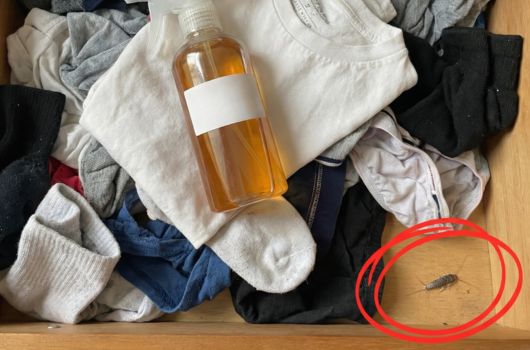
Listen, I know tackling a bug problem sounds like a massive, exhausting chore. But throwing a few cloves over a messy, dusty closet won’t magically solve everything. You need a strategy. Look how easy it is to sort this out if you follow these steps:
- Empty the space completely. Whether it is a closet, a drawer, or a bookshelf. Yes, take every single item out. You need a blank canvas.
- Ditch the cardboard. This is crucial! Silverfish survive by eating the starchy glue used to hold cardboard boxes together. Swap those old shoe boxes for airtight plastic bins.
- Vacuum like your life depends on it. Hit every single corner, crack, and baseboard. Use the brush attachment. This is the exact time to suck up any dust, crumbs, or tiny silverfish eggs trying to hide from you.
- Wipe it down. Spray our first recipe (the vinegar and water mix) onto a clean microfiber cloth and aggressively wipe down all the shelves and walls inside the closet.
- Let it breathe. Leave the doors wide open until the space is 100% bone dry. Moisture is a silverfish’s main course! Consider putting a moisture-absorber pot in the corner if your room is naturally damp.
- Place your defenses. Set up your clove sachets, your cedar-soaked cotton balls, or a light dusting of diatomaceous earth in the very back corners.
- Put it all back. Return your clothes and books to their now fresh, safe, and bug-proof home.
Done. The environment is now a completely hostile territory for them, but a wonderfully clean space for you.
Which one is your perfect match?
Still unsure where to start your battle? Think of it this way.
Need a deep, satisfying clean to wipe down those dirty, neglected cracks? Go straight for the Vinegar Mix. For protecting heavy boxes of old books and important family papers without the slightest risk of moisture damage, the Clove Sachet or dried Citrus Peels are unbeatable. Suspect a larger hiding spot behind a bookshelf? Try dusting some Diatomaceous Earth there. But finally, for beautifully scented winter clothes and continuous, long-lasting protection, definitely invest in some Cedar or Lavender Essential Oil.
The most important thing is simply taking action and not letting these fast little bugs take over your personal space. You have the tools right in your kitchen. Go get them!